The Hourglass Economy of Turkey
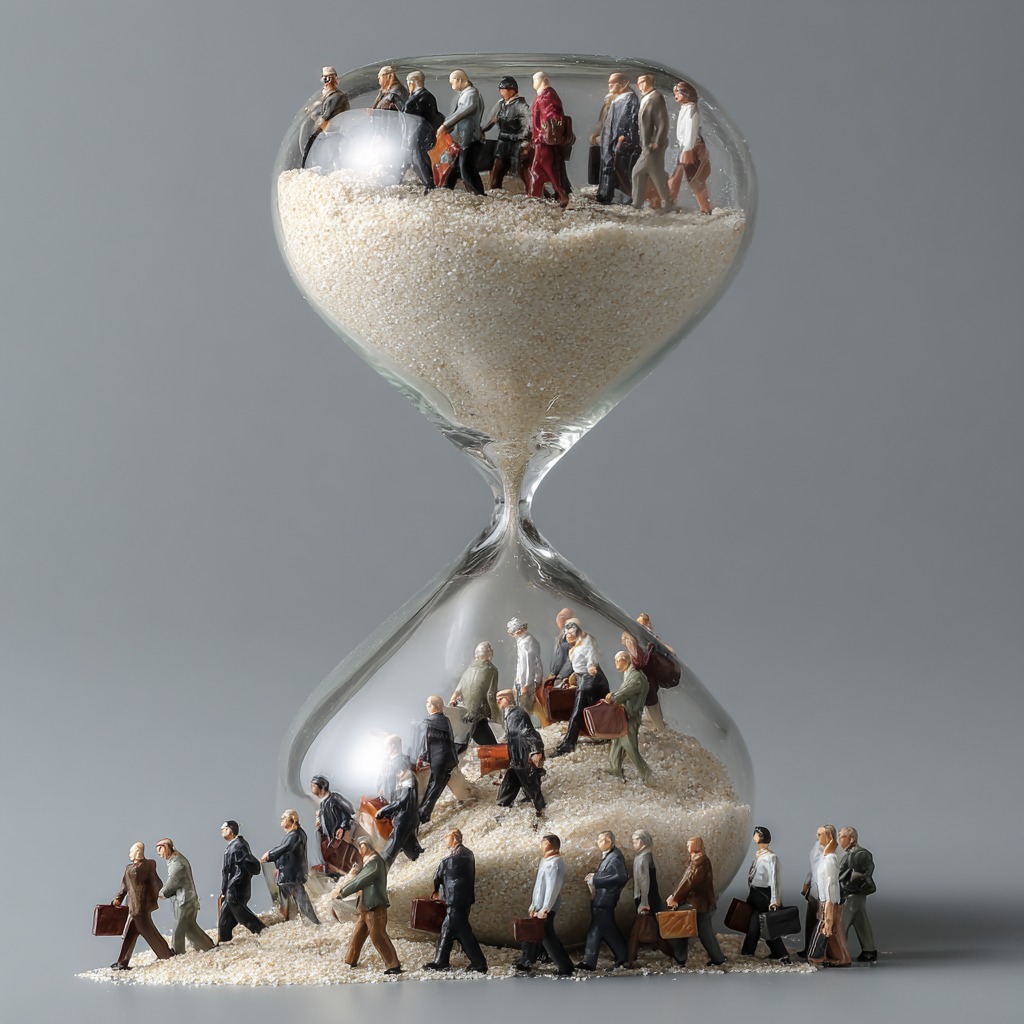
Turkey's economy increasingly behaves like an hourglass: pressure in the middle, resilience at the top, survival strategies at the bottom and a widening challenge for companies.
Executive Summary
- The hourglass economy describes pressure on the middle while the top and bottom adapt in different ways.
- This structure changes consumption, employment, real estate and corporate strategy.
- Companies need to understand not only income levels, but also behavior under pressure.
- Turkey’s middle segment remains strategically important, but it is harder to serve with old assumptions.
A Working Thesis
Turkey’s economy can increasingly be read as an hourglass. The upper segment continues to consume, invest and protect itself. The lower segment adapts through necessity, informality and price sensitivity. The middle carries the pressure.
This is not only a social observation. It is a business framework.
What Changes for Companies
The middle customer, middle employee and middle-tier business model all become harder to define. Companies face a market where premium demand can remain strong while the broad middle becomes more selective, delayed or fragmented.
That affects pricing, office choices, hiring, retail, services and investment timing.
Why the Middle Still Matters
The middle is pressured, but it is not irrelevant. It is where aspiration, education, productivity and long-term institutional demand still live. The question is whether companies can design products, workplaces and services that match this new reality.
Key Implications
- Premium and budget strategies may outperform unclear middle positioning.
- Employers must rethink compensation, flexibility and workplace location.
- Real estate demand will reflect both cost pressure and status signaling.
- Turkey’s economic story will depend heavily on whether the middle can regain confidence.
FAQ
What is the hourglass economy?
It is an economy where the middle segment is squeezed while the top and bottom behave according to very different pressures.
Why is Turkey a relevant case?
Turkey combines inflation pressure, urban concentration, demographic shifts, entrepreneurial energy and strong status-driven consumption patterns.
Why does this matter for business strategy?
Because old assumptions about the average customer, average employee and average office user become less reliable.